


tr4s
-
Posts
275 -
Joined
-
Last visited
Everything posted by tr4s
-
An impaired cell will undergo thermal agitation when subjected to a heavy load.
-
The most effective method to assess the battery is by measuring the terminal voltage while it is under load. What is the voltage throughout the process of trying to start the engine?
-
On a daily basis, I have a comprehensive insurance policy with State Farm. Additionally, I have an agreed upon value policy for any recreational vehicles I own at the moment. Based on the agreed upon value of $100,000, I believe the monthly cost would not exceed $100.
-
What is the consequence if you shift down to 5th gear and then it occurs?
-
Has it been regularly maintained? Therefore, the number of stamps in the service book would either be 4 or 5, depending on the registration date. It is possible that the gasoline filter is obstructed or contaminated with water.
-
I will comply.
-
The plastic link pipe connecting the thermostat housing to the water pump is prone to cracking at the point of insertion. This issue does not often provide any warning signs and may result in a hidden leak while the vehicle is in motion. It is crucial to identify and address this problem before driving, since these engines do not perform well when overheated.
-
It is becoming more difficult to find...

-
Simply take a ride and see real-time sensor data with the inserted spacer. This is the optimal method for testing.
-
Insert a diminutive spacer between the sensor bolt and the bolt hole. If there are no more codes, it indicates that the distance between the sensor and the ring is appropriately or too sensitive.
-
Yes, it works well at all temperatures. Initially, during the early stages of Exhaust Gas Recirculation (EGR), it was common practice to disable it at low temperatures due to the potential for combustion stability issues. Following the dieselgate scandal, which is seen as a method of manipulating emissions tests, manufacturers are required to use exhaust gas recirculation (EGR) unless it can be shown that doing so is not feasible.
-
The LFA and Carrera GT sound is determined by the number of cylinders, crank configuration, and firing sequence. Not to mention the exhaust, especially if it is a straight pipe configuration.
-
I was undecided about choosing BC, but ultimately, Signature's customer service convinced me. The process of balancing necessitated the inclusion of little weight, and the wheel quality is exceptional.
-
The object fractured into three fragments, exhibiting a high degree of fragility and evidently remaining affixed to the vehicle till the present day. I severely taxed my patience by disassembling everything to address the issue, without breaking a single clip, and then this. As you said, investing in a new item results in reduced cleaning requirements and the assurance that it is completely new. It is essential to use caution while affixing the motor to the newly introduced intake manifold.
-
While I am reluctant to remove the flaps, as Finestey said, it would be more convenient to replace them. It is logical given the amount of miles, and it is evident that it need significant cleaning.
-
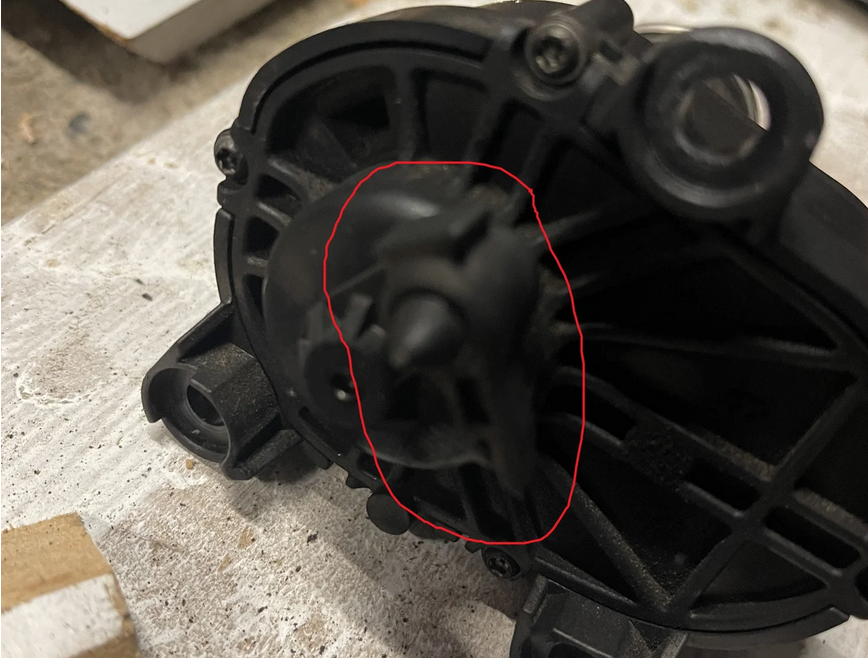
Thank you for your assistance. However, I realised that my explanation was incorrect. The little plastic arm that attaches to the rod of the swirl flaps is barely visible in the picture... Pardon me, but is the diminutive arm or bracket located at the extremity of that? If that is really the case, do they also provide a V6 version?
-
I just disassembled the intake manifold of my 530d F10 in order to thoroughly clean it, since it has been accumulated 133,000 miles and is now 14 years old, resulting in a noticeable obstruction. Although the polymers used were not excessively damaged, the little plastic arm connecting the swirl flap actuator and intake rod shattered when I detached them. Would it be foolish to believe that I can just replace one arm, or do I need to repair the whole intake manifold at this point? The issue arises as to whether the aftermarket alternatives are satisfactory at a price range of 100-150 quid, as opposed to a second-hand replacement.
-
Is the parking brake stuck and causing it to bind?
-
A voltage reduction on a fresh battery the following morning after a 3-hour run is unexpected. Consider testing for a parasitic current draw using an amp metre. Be cautious while doing so. Vehicles may take some time to completely shut down. Ideally, there should be no more than a 30mA draw when the vehicle is totally shut down.
-
The battery voltage should be around 14 volts while the engine is operating. If it is not, then the battery is not being charged.
-
Thank you, R8-Stuff, for the original equipment manufacturer Recaro seats.
tr4s replied to Radiantecon's topic in General
What are your future plans, Angurita? -
Thank you, R8-Stuff, for the original equipment manufacturer Recaro seats.
tr4s replied to Radiantecon's topic in General
What are your future plans, Angurita? -
Today, I took the automobile to the garage, and they thoroughly inspected it to identify the source of the vibration. The ATF was inspected and found to be clean and fresh, which is reassuring. The engine and gearbox mounts have been inspected and found to be in good condition. However, attention is now directed on the pulley at the front of the engine, which seems to be shaking and might be the cause of the issue. Hopefully.
-
I trust that "sealed for life" has not been completed yet.
-
Hello everyone, I would appreciate any input from the group. Our 2009 W211e280 sport has just reached 100k miles and had been problem-free until yesterday. After driving 40 miles, I got home and noticed a minor clunk when I placed the vehicle in reverse. While reversing, it seemed like the brakes were sticking at low speed. Upon starting the engine, the vehicle experiences mild jolts and judders while moving at lower speeds. Additionally, there is a sensation of the engine surging slightly while in park. It operates smoothly when driving and changes through the gears adequately. Choosing the opposite option allows me to detect a binding noise. If it were a front-wheel-drive automobile, I would suspect that the drive shafts could be deteriorating, but obviously, this is not the case. The garage where we have it serviced is closed until Monday. I will attempt to use a code reader on it. Does it seem like the torque converter is failing? I would appreciate any guidance or tips. Cheers