
All Activity
- Today
-
Endorsement for the 320i.
-
This illustrates the need of maintaining the guarantee on these vehicles. It raises the question of whether they extend warranties on the batteries.
-
I was on the verge of connecting the new issue, ha ha. I recognise its rarity, but the £7,000 represents a new car for me.
-
I would choose the 320i, as the expenses associated with repairs are significantly lower, and locating a garage proficient in hybrid repairs can be challenging. Additionally, as Rasa mentioned, the cost of a new battery is a maximum of £150, in contrast to £7,000, which is more palatable.
-
Ongoing discussion concerning a 330e, wherein the owner has incurred exorbitant charges to rectify a problem that remains unresolved. If you are determined to get a hybrid, consider a Mercedes, as the alarming accounts I have encountered regarding the 330e reveal that when issues arise, they are significant, and most authorised dealers lack the expertise to address them effectively.
-
There are numerous accounts of defective batteries. While it may not be prevalent, the financial burden is substantial, amounting to £7,000. Why not consider a 320d?
-
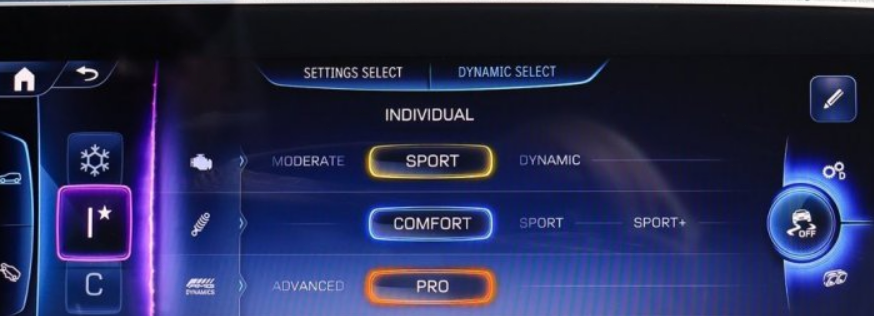
Seeking to purchase a pre-owned 330e or 320i from the year 2020 or later to substitute my ageing E92 320 from 2007. I was inclined to choose the 330e hybrid, but I have heard reports of owners encountering problems related to the intricacy of the hybrid system. There appears to be an abundance of these in the used market from 2020/2021, leading me to question whether this indicates their current susceptibility to malfunctions. I am contemplating whether the alternative to fuel would be a more dependable choice. I would prefer to achieve at least the same fuel efficiency as my current vehicle, if not an improvement. Any guidance would be valued.
-
 I recognised the familiarity; it has prompted my recollection. It appears that AI still has considerable progress to make.
 -
 Does it appear as such?
 -
Artificial Intelligence proposes this. The purple square including a vertical line and a star symbol (which manifests as a purple vertical line and a star on the display) signifies a sensor or electronic control unit alert in your Mercedes W205. This is a generic alert, frequently associated with a malfunction in a particular system, and it is generally accompanied by an additional message on the dashboard that delineates the precise issue. Proposed Measures Verify for an associated message: The primary dashboard interface will probably exhibit language (e.g., "Inoperative", "Refer to Owner's Manual") elucidating the particular system experiencing a malfunction (e.g., Active Brake Assist, ESP, or a designated sensor). Reinitiate the vehicle. Occasionally, the problem may stem from a transient electronic malfunction that can be rectified by powering down the vehicle, removing the key for around 30 seconds, and thereafter restarting the engine. Exercise vigilance while driving: This indicator, when yellow or purple, indicates caution rather than an immediate red-level safety danger, allowing you to proceed to a safe place or an authorised repair facility. Seek the assistance of a technician: Due to the symbol's ambiguity, a diagnostic scan tool (OBD-II scanner) is required to ascertain the exact error code and root cause.
-
 The "very clever Mercedes-Me" may be alerting you that Christmas is approaching and that you need to get the remaining gifts. The Star signifies the forthcoming event. The purple square symbolises a gift-wrapped package. The demarcation between them is the chronology.
 -
 Consult the guidebook for the cluster display, which should provide the necessary information. Alternatively, as previously mentioned, a photograph would be beneficial.
 -
 Photographic evidence or it is unsubstantiated...
 -
 Has anyone experienced this? I have seen that it could be attributed to various factors; nevertheless, are there any prevalent issues?
 - Last week
-
What is the pressure on the rail? Have you verified the reading? Is the leak occurring at the T fitting or at the top of the injector?
-
The fluid in the return line consists solely of that which is not utilised during injection, specifically referred to as leak-off. The common rail maintains constant pressure, allowing the injector to utilise it as needed, and ideally, there would be no return flow. However, we should anticipate some. It may be advisable to conduct an additional leak-off test to determine if any injector exhibits excessive leakage. In comparison to the others, it should serve as a reasonable demonstration, given its novelty. Inserting the plastic leaks into the injector can be challenging; I encountered difficulties with the new 'O' rings being excessively thick. Have you possibly solved one?
-
I found his post quite caustic.
-
This platform is free to use, and your post was made less than 24 hours ago. Individuals provide responses here at their convenience and leisure. Increased activity on the forum would reveal that numerous users are consistently engaging with others and offering precise and prompt assistance on various concerns. Your assertion that "few if any want to contribute or help" is intriguing, as a brief review of your posts reveals that they predominantly solicit assistance without any indication of your own contributions.
-
I sincerely apologise if my post caused offence. Based on my experiences over the years, it appears that very few individuals are willing to contribute or assist others. When such assistance does occur, it is undoubtedly invaluable, yet it seems challenging to connect with someone who possesses the necessary knowledge.
-
The forum is highly active. Do you believe that such a comment is more likely to elicit assistance?
-
There must be someone available who can assist. Kindly or Is this forum as inactive as it appears?
-
My 2007 W639 Vito 111 CDI has begun experiencing fuel-related troubles. Exiting the conversation. The background is as follows: after performing repairs on an injector blow-by and the hold-down bolt threads, the car began to leak gasoline from its leak-off system. I suspected that I had been excessively forceful with the press-down clips on the plastic pipe fittings attached to the spigot pipes emerging from the side of the injector.I conducted a leak-off test and discovered that three of the injectors were defective, exhibiting excessive fuel leakage. Consequently, I acquired a whole set of replacement injectors, Honda copper washers, and new stretch hold-down bolts, and replaced them together with a brand new leak-off pipe system. after a run test drive i noticed it was leaking yet again but this time knowing full well the leak off was just a dribble and the leaking wouldnt start until at lease five mins of running ,i then purchased another pipe set believing it must of been a dud set i had previously got and fitted another new set ,another test run and another leak ensued so this time i thought it must be having trouble to leak back into the in-tank pumped supply line where it is plumbed into via an alloy y adapter ,having looked at it i considered it could either be a clogged filter (where the in tank pump brings the low pressure supply into) or maybe a locked up non return check valve which is in the new replaced leak off pipe so i checked the valve using air line and a peice of stiff wire all good replaced filter and test drive ,still leaking fuel out of the weakest point of the rubber leak off sections between the injectors , this tells me the pressure of the system where it is supposed to bleed into is far too high ? I assume that the return line to the tank may be obstructed. Could it be a defective pressure regulator valve in the common rail? Are there any technicians available to assist me in resolving this issue? I am perplexed; the vehicle starts and operates flawlessly. Could it be experiencing excessive pressure owing to a malfunctioning pressure control system? How does it control the pressure returning to the tank following its effective transit through the common rail? I am unable to locate anybody with the requisite experience and traditional diagnostic skills to identify this type of defect from the past.